Human-Centric AI 2026: How Ethical Intelligence and Responsible Design Are Shaping the Future of Technology
The rapid rise of artificial intelligence has reshaped how people work, communicate, learn, and make decisions. But as AI systems become more powerful, a critical question is emerging: Who is this intelligence really serving?
In 2026, the answer is increasingly clear—technology must serve people first.
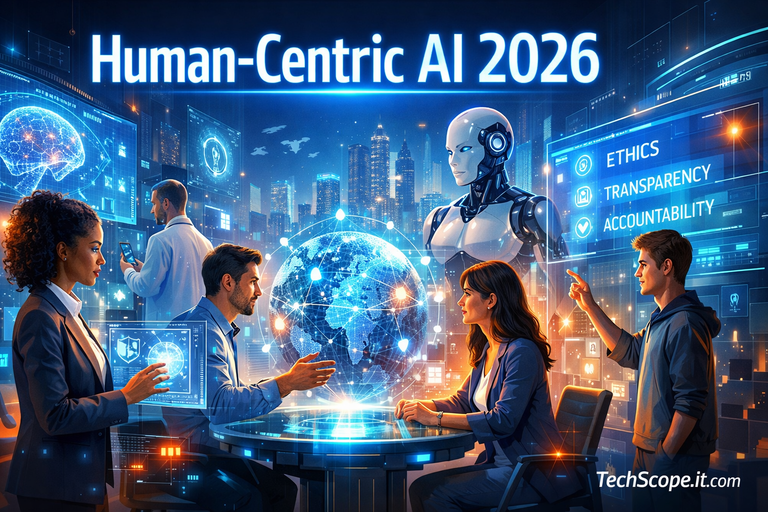
Human-Centric AI 2026 represents a shift away from automation for efficiency alone toward systems designed with human values, ethics, transparency, and accountability at their core. Instead of replacing human judgment, modern AI aims to augment human intelligence, ensuring technology remains trustworthy, inclusive, and socially responsible.
This evolution is not about slowing innovation. It’s about guiding it in a way that enhances human potential while minimizing harm.
Table of Contents
What Is Human-Centric AI and Why Does It Matter in 2026?
Human-centric AI refers to artificial intelligence systems designed around human needs, rights, and values rather than purely technical performance. In 2026, this approach matters more than ever because AI now influences hiring decisions, medical diagnoses, financial approvals, education pathways, and even public policy.
Unlike early AI models that operated as opaque “black boxes,” human-centric AI emphasizes:
- Transparency in decision-making
- Ethical design and fairness
- Human oversight and control
- Trust and accountability
As AI becomes embedded in daily life—similar to the systems explored in AI in Everyday Life—users expect technology that explains itself, respects privacy, and aligns with real human goals.
A foundational understanding of this philosophy is outlined in Human-centered artificial intelligence, which explains how responsible design principles shape modern AI development.
How Human-Centric AI Differs from Traditional AI Systems
Traditional AI systems were largely built to optimize speed, accuracy, and efficiency. While powerful, they often lacked transparency, context awareness, and ethical safeguards.
Human-centric AI takes a fundamentally different approach.
Instead of asking “What is the fastest outcome?”, it asks “What is the best outcome for people?”
This shift reflects broader transformations discussed in Technology Trends 2026, where intelligent systems are increasingly expected to adapt responsibly rather than operate blindly.
Key Differences
- Rule-based automation vs value-aligned intelligence
- Black-box predictions vs explainable reasoning
- Efficiency-first goals vs human-first impact
- Minimal oversight vs continuous human involvement
Ethical Intelligence: The Core of Human-Centric AI
Ethical intelligence is the backbone of human-centric AI. It ensures AI systems behave fairly, responsibly, and predictably—especially in high-stakes environments.
In 2026, ethical AI design includes:
- Bias detection and mitigation
- Transparent decision pathways
- Privacy-first data handling
- Accountability mechanisms
These principles are no longer optional. Governments, businesses, and users increasingly demand AI systems that can justify their decisions and correct mistakes.
This long-term, trust-based approach to innovation aligns closely with the strategic direction outlined in Future of Technology 2026, where sustainable growth depends on ethics as much as engineering.
Human-in-the-Loop AI: Keeping People in Control
One of the most important features of human-centric AI is the human-in-the-loop (HITL) model. Instead of allowing AI to act independently, HITL systems keep humans actively involved in training, monitoring, and decision validation.
This approach is especially critical in areas such as:
- Healthcare diagnostics
- Financial risk assessment
- Legal and judicial systems
- Public sector services
AI provides insights, predictions, and recommendations—but humans retain final authority. This collaborative model reduces errors, builds trust, and ensures accountability.
Many real-world examples of this partnership already exist in consumer and professional tools highlighted in AI in Everyday Life.
Real-World Applications of Human-Centric AI in 2026
Human-centric AI is no longer theoretical. It is actively transforming industries while maintaining ethical safeguards.
Healthcare
AI assists doctors with diagnostics, treatment planning, and patient monitoring—without replacing clinical judgment. Transparency and explainability help doctors understand why a recommendation was made.
Business and the Workplace
AI enhances productivity by supporting decision-making, forecasting, and workflow optimization rather than eliminating jobs. This balanced approach reflects broader workforce trends discussed in Technology Trends 2026.
Education
Adaptive learning systems personalize education while respecting student privacy, learning pace, and cognitive development.
Public Services
Governments use human-centric AI to improve service delivery while maintaining fairness, accountability, and public trust.
Challenges and Limitations of Human-Centric AI
Despite its promise, human-centric AI faces real challenges.
Designing ethical systems requires:
- Higher development costs
- Multidisciplinary expertise
- Clear governance frameworks
- Ongoing monitoring and audits
Defining universal ethical standards is also difficult across cultures, industries, and legal systems. However, these challenges reinforce the importance of long-term planning—an idea emphasized throughout Future of Technology 2026.
Short-term efficiency may be tempting, but responsible AI delivers sustainable value over time.
The Future of Human-Centric AI Beyond 2026
Looking ahead, human-centric AI will play a central role in shaping public trust in technology. Systems will become more explainable, context-aware, and emotionally intelligent—designed to collaborate with humans rather than compete with them.
As AI governance frameworks mature and ethical standards become more defined, organizations that adopt human-centric principles early will gain a significant advantage in credibility, adoption, and long-term success.
Human-centric AI offers a future where innovation is not just powerful—but responsible, inclusive, and human-aligned.
Frequently Asked Questions
What is human-centric AI?
It is an AI design approach that prioritizes human values, ethics, transparency, and accountability.
Why is human-centric AI important in 2026?
Because AI increasingly affects critical life decisions, making trust and responsibility essential.
Does human-centric AI reduce efficiency?
No. It improves long-term reliability, adoption, and societal impact.
Is human-centric AI regulated?
Regulations are evolving globally, but ethical design is becoming a standard expectation.
Conclusion
Human-Centric AI 2026 marks a defining shift in how technology is designed, deployed, and trusted. By placing ethics, transparency, and human values at the core of artificial intelligence, organizations can unlock innovation without sacrificing responsibility. As AI continues to influence everyday life, business decisions, and public systems, the future belongs to technologies that empower people—not replace them. Embracing human-centric AI today is not just a technical choice, but a strategic and ethical commitment to sustainable progress.