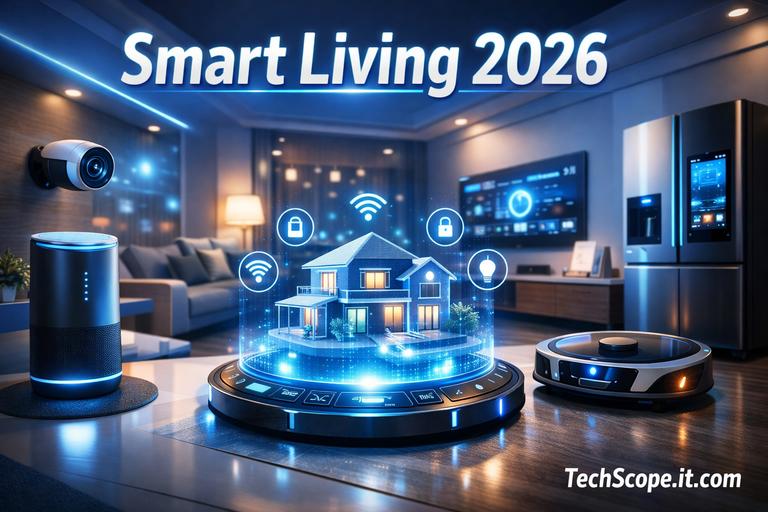
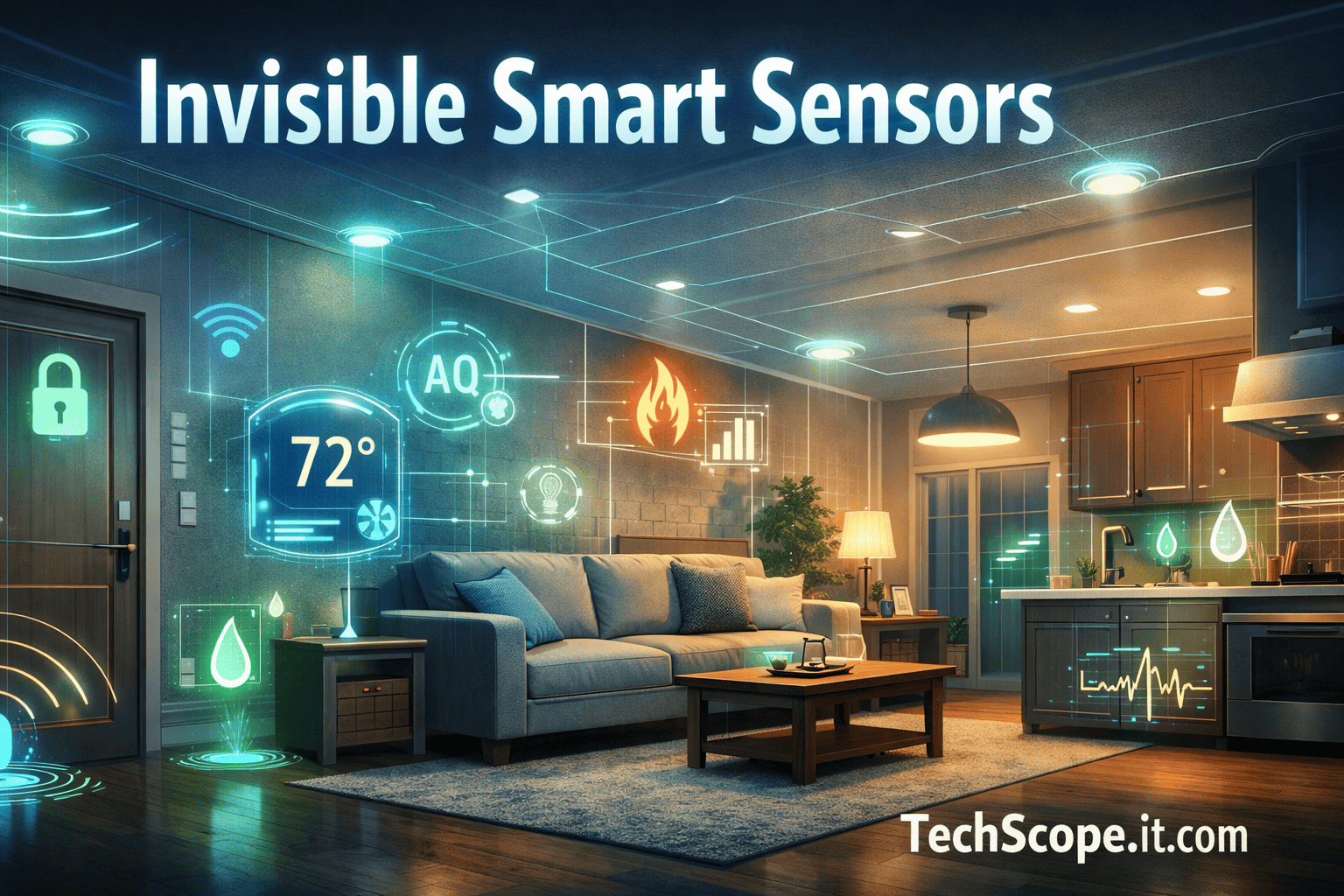
Smart Home Sensors 2026: Invisible Technology That Predicts Problems Before They Happen
Smart homes are no longer defined by voice commands, flashy gadgets, or mobile apps alone. In 2026, the real intelligence of modern homes lies beneath the surface—quietly operating through Smart Home Sensors 2026. These invisible technologies continuously monitor environments, learn behavioral patterns, and predict problems long before homeowners realize anything is wrong.
Unlike traditional smart devices that react to commands or alerts, smart home sensors work proactively. They detect subtle changes in temperature, moisture, motion, air quality, vibration, and energy usage, allowing homes to respond automatically. This shift from reactive automation to predictive intelligence marks one of the most important transformations in home technology today.
As artificial intelligence becomes deeply integrated into daily routines, this evolution mirrors broader advancements discussed in AI in Everyday Life, where smart systems actively manage comfort, safety, and efficiency without constant human involvement.
Table of Contents
How Smart Home Sensors Work in 2026
Smart Home Sensors 2026 operate as a continuous data network rather than isolated tools. They collect real-time environmental information and analyze it using AI-powered algorithms to detect patterns, anomalies, and potential risks.
Instead of sending simple alerts, modern sensors learn how your home normally behaves. When something deviates—such as unusual humidity, abnormal vibrations, or unexpected energy spikes—the system responds instantly or warns you before damage occurs.
This intelligence allows homes to become self-aware, adaptive, and predictive rather than merely automated.
Core Sensor Technologies Powering Smart Homes
Modern sensor ecosystems combine multiple technologies working together:
- Motion and occupancy sensors that understand presence, movement, and usage patterns
- Temperature and humidity sensors that detect climate changes and moisture buildup
- Air quality sensors monitoring pollutants, allergens, and carbon dioxide levels
- Leak and pressure sensors identifying plumbing issues before flooding occurs
- Vibration and sound sensors detecting appliance malfunctions or structural stress
These sensors form the foundation of intelligent ecosystems explored in Smart Gadgets 2026, where interconnected devices work collaboratively instead of independently.
Predictive Intelligence: Detecting Problems Before They Escalate
The defining feature of Smart Home Sensors 2026 is predictive intelligence. Instead of waiting for failures, these systems identify early warning signals that indicate potential problems.
For example, a moisture sensor may detect slight humidity changes behind walls weeks before visible mold appears. Vibration sensors can recognize abnormal appliance behavior before mechanical failure occurs. Energy sensors can identify inefficient circuits that may lead to electrical hazards.
Industry research highlighted by Illinois Renewables explains how smart energy sensors predict failures and inefficiencies before costly damage occurs, reinforcing the importance of proactive monitoring in modern homes.
Smart Home Sensors for Safety and Security
Safety is one of the strongest benefits of smart home sensor technology. Rather than relying solely on cameras or alarms, sensor-driven systems provide layered, invisible protection.
Fire sensors detect heat pattern changes earlier than smoke alarms. Gas sensors identify leaks before dangerous concentrations form. Structural sensors monitor stress in walls, floors, and foundations. Sound and vibration sensors recognize break-ins or unusual disturbances even without visual confirmation.
These advanced protections align closely with the security-first strategies outlined in Secure Smart Home Devices 2026, where prevention replaces reaction.
Energy Optimization and Cost Efficiency
Smart Home Sensors 2026 significantly reduce energy waste by understanding how and when spaces are used. Instead of fixed schedules, systems dynamically adjust lighting, heating, cooling, and appliance usage based on occupancy and behavior.
For instance, rooms automatically power down when unoccupied, climate control adjusts based on real-time conditions, and appliances operate during off-peak energy hours. Over time, these optimizations can lead to substantial savings on utility bills while supporting sustainability goals.
This intelligent energy management transforms homes into adaptive systems that balance comfort with efficiency.
Health, Comfort, and Indoor Wellbeing
Indoor wellbeing is becoming a major focus of smart home technology. Sensors now monitor factors that directly impact health, including air quality, humidity, noise levels, and lighting conditions.
Poor air circulation, excessive humidity, or high pollutant levels can trigger allergies, fatigue, and respiratory issues. Smart sensors respond automatically by adjusting ventilation, filtering air, or notifying occupants when conditions become unhealthy.
These systems help homes actively support sleep quality, productivity, and overall wellness—turning living spaces into responsive health environments.
Privacy, Data Security, and Ethical Considerations
With continuous monitoring comes responsibility. Smart Home Sensors 2026 raise important questions about data privacy and security.
Modern systems address these concerns through encrypted communication, on-device processing, and user-controlled data permissions. Rather than sending raw data to the cloud, many sensors analyze information locally and share only essential insights.
Transparency and control are now central design principles, ensuring intelligence does not come at the expense of privacy.
Smart Home Sensors vs Traditional Smart Devices
Traditional smart devices respond to commands—turning lights on, adjusting thermostats, or playing music. Smart home sensors, however, operate autonomously.
Sensors act as the nervous system of intelligent homes, enabling devices to respond contextually instead of reactively. This shift transforms homes from tool-based systems into environment-aware ecosystems capable of independent decision-making.
Who Benefits Most from Smart Home Sensors 2026
Smart home sensors deliver value across multiple user groups:
- Families gain improved safety and accident prevention
- Seniors benefit from unobtrusive monitoring and independent living support
- Property owners reduce maintenance costs through predictive alerts
- Remote homeowners monitor properties in real time
- Energy-conscious users optimize consumption automatically
These benefits make smart sensors practical, not futuristic.
Future Trends in Smart Home Sensor Technology
Looking ahead, smart home sensors will become smaller, more autonomous, and deeply integrated into building materials. Walls, floors, and furniture may soon contain embedded sensors that require no maintenance.
Future homes may schedule repairs automatically, adjust structural systems, and manage resources without user input. This vision of self-healing, self-optimizing homes is rapidly approaching reality.
FAQs About Smart Home Sensors 2026
Are smart home sensors always watching or listening?
Most sensors monitor environmental data, not personal activity. Many systems avoid audio or video entirely.
Do smart home sensors work without internet access?
Yes. Many sensors perform local processing and only require internet access for remote notifications.
Are smart home sensors expensive?
Costs have dropped significantly, and long-term savings from energy efficiency and damage prevention often outweigh initial investment.
Is sensor data secure?
Modern systems use encryption, access controls, and local processing to protect user data.
Conclusion: Why Smart Home Sensors 2026 Are Essential
Smart Home Sensors 2026 represent a fundamental shift in how homes function. By predicting problems, enhancing safety, optimizing energy, and supporting wellbeing, these invisible technologies are becoming the backbone of intelligent living.
Homes are no longer passive structures—they are becoming proactive partners that protect, adapt, and improve everyday life without demanding attention. In the near future, smart home sensors won’t be optional upgrades—they’ll be the standard foundation of modern living.