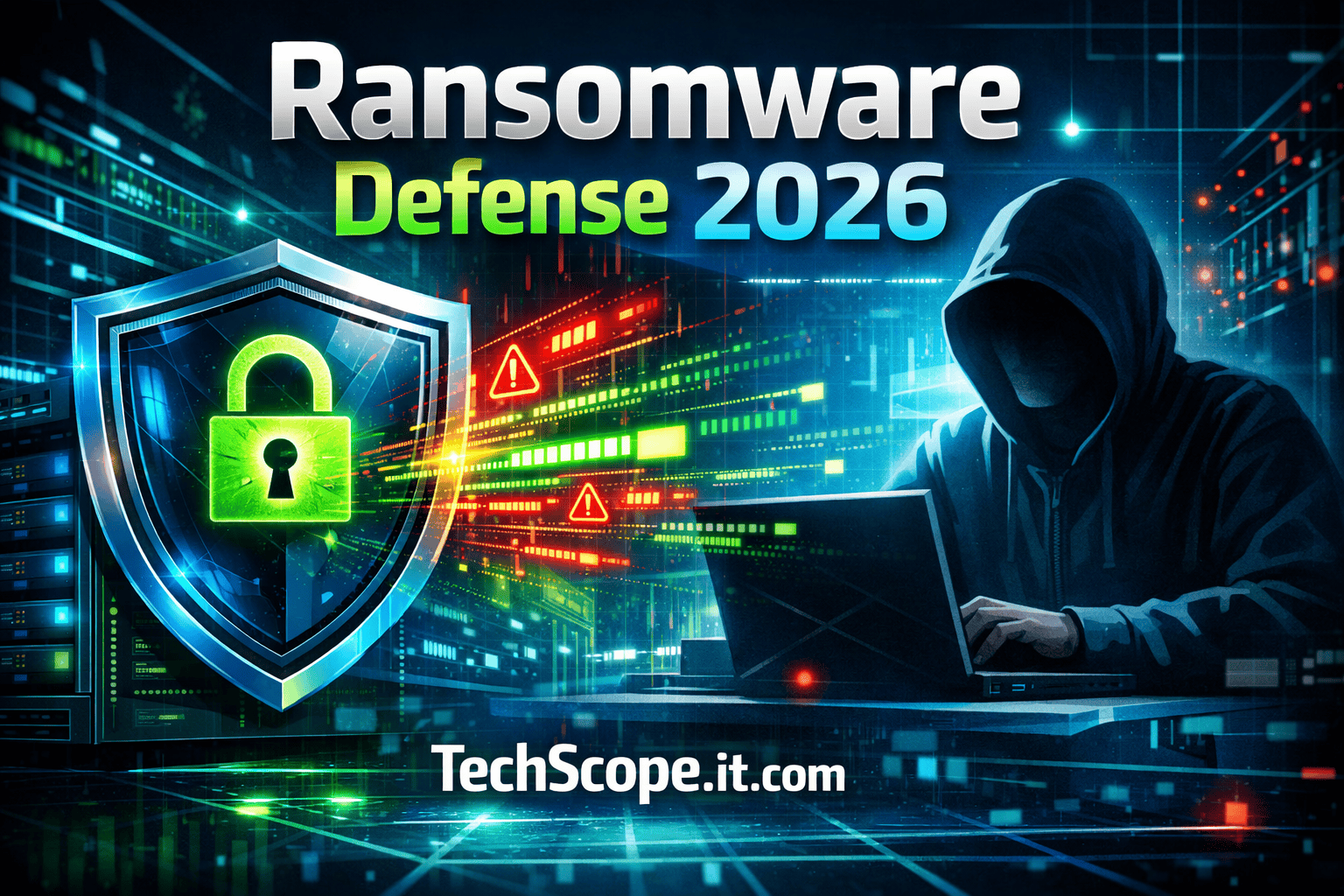
Ransomware Defense Strategies 2026: Best Practices, Case Studies, and Incident Response Playbooks
Ransomware has evolved from a disruptive nuisance into one of the most financially and operationally devastating cyber threats of the digital era. In 2026, ransomware attacks are no longer blunt-force assaults. They are intelligent, data-driven, and often customized for specific organizations, industries, and even individuals. As attackers adopt artificial intelligence, automation, and psychological manipulation, defending against ransomware requires far more than antivirus software or basic backups.
This comprehensive guide explores Ransomware Defense Strategies 2026 through real-world examples, modern best practices, and actionable incident response playbooks. Whether you manage a business network, develop security policies, or simply want to understand where cyber threats are heading, this article equips you with practical, future-ready knowledge.
Table of Contents
The Ransomware Landscape in 2026
Why is ransomware still such a serious threat in 2026?
Because ransomware has become smarter, stealthier, and financially optimized. Modern attackers no longer rely on mass infections. Instead, they study targets, identify weaknesses, and deploy tailored attacks designed to maximize leverage and minimize detection.
Ransomware groups now operate like professional businesses. They use Ransomware-as-a-Service (RaaS) platforms, customer support portals for victims, and even reputation management within criminal marketplaces. The rise of double and triple extortion—encrypting systems, stealing data, and threatening public leaks or DDoS attacks—has drastically increased pressure on victims.
Much of this sophistication mirrors legitimate AI adoption trends. The same intelligent automation transforming daily productivity, as explored in AI in Everyday Life, is now being weaponized by cybercriminals to scale attacks with alarming efficiency.
How Modern Ransomware Attacks Work
How do ransomware attacks succeed today despite improved security tools?
Because attackers exploit a combination of human error, weak identity controls, and delayed detection rather than relying on technical exploits alone.
A typical ransomware attack in 2026 unfolds in stages:
- Initial Access – Often achieved through phishing emails, malicious ads, compromised credentials, or unsecured mobile devices.
- Persistence and Lateral Movement – Attackers quietly explore the network, escalate privileges, and map critical systems.
- Data Exfiltration – Sensitive files are copied externally before encryption begins.
- Encryption and Extortion – Systems are locked, and ransom demands are issued with strict deadlines.
Mobile endpoints have become a common entry point. Employees frequently access corporate systems from personal devices, increasing exposure. This makes data protection strategies outlined in Secure Personal Data on Smartphones 2026 a critical but often overlooked defense layer.
AI-Driven Ransomware and Automated Attacks
What makes ransomware in 2026 fundamentally different from earlier years?
Artificial intelligence has removed guesswork from cybercrime. Ransomware can now adapt its behavior in real time, evade detection systems, and select attack paths autonomously.
AI-powered ransomware capabilities include:
- Automated vulnerability scanning across large networks
- Dynamic malware mutation to bypass signature-based detection
- Highly personalized phishing messages based on scraped user data
Security researchers have confirmed that attackers increasingly rely on machine learning to accelerate reconnaissance and optimize exploitation workflows. This shift is clearly outlined in TrustNet’s analysis of AI-driven cyber threats, which highlights how automation has lowered the barrier to entry for sophisticated attacks.
Core Ransomware Defense Strategies for 2026
How can organizations realistically defend against ransomware today?
By abandoning single-layer security and adopting a defense-in-depth strategy that focuses on prevention, detection, and resilience.
Key defense pillars include:
Zero Trust Architecture
No device, user, or application should be trusted by default. Continuous authentication and least-privilege access drastically reduce lateral movement opportunities.
Advanced Endpoint Detection and Response (EDR)
Modern EDR tools use behavioral analysis rather than static signatures, enabling earlier detection of suspicious activity.
Network Segmentation
Isolating critical systems limits the blast radius of an attack and prevents organization-wide encryption.
Immutable and Offline Backups
Backups must be protected from modification and stored separately to remain viable during recovery.
Protecting Financial Systems and Digital Assets
Why are payment platforms and identity systems prime ransomware targets?
Because they represent immediate financial leverage. Disrupting transactions, payroll, or customer payments can paralyze operations within hours.
As digital wallets, biometric authentication, and cashless payments expand globally, attackers increasingly focus on identity theft and financial system manipulation. This makes the security principles discussed in Digital Wallets & Biometric Payments 2026 directly relevant to ransomware defense planning.
Organizations must strengthen:
- Multi-factor and biometric authentication
- Transaction monitoring and anomaly detection
- Identity lifecycle management
Incident Response Playbooks That Actually Work
What should you do the moment ransomware is detected?
The worst time to design a response plan is during an active attack. In 2026, speed and coordination determine outcomes.
A proven incident response playbook includes:
- Immediate Isolation – Disconnect affected systems to stop spread
- Threat Identification – Determine ransomware variant and attack scope
- Communication Control – Inform internal teams while managing public disclosure
- Data Recovery – Restore from clean backups only after full system validation
- Post-Incident Review – Identify root causes and close security gaps
Organizations with rehearsed response plans recover faster, lose less data, and face fewer regulatory consequences.
Real-World Ransomware Case Studies
What do actual ransomware incidents teach us?
They reveal that preparation—not payment—determines recovery success.
- Healthcare Systems: Hospitals hit by ransomware experienced life-threatening disruptions due to delayed access to patient records. Facilities with segmented networks restored services faster.
- Financial Institutions: Banks targeted through third-party vendors demonstrated the importance of supply chain security.
- Small Businesses: Companies without backups faced permanent data loss, while prepared firms resumed operations within days.
Across industries, the lesson is consistent: ransomware resilience is built before an attack occurs.
Future Trends in Ransomware Defense Beyond 2026
Where is ransomware defense heading next?
The future lies in prediction rather than reaction.
Emerging trends include:
- AI-driven threat intelligence that anticipates attack patterns
- Continuous behavioral authentication instead of static credentials
- Automated security orchestration to contain threats in seconds
Regulatory pressure and cyber insurance requirements will further push organizations toward proactive defense models rather than minimal compliance.
Frequently Asked Questions (FAQs)
Is paying ransomware ever a good idea?
No. Payment does not guarantee data recovery and often funds future attacks.
Can backups fully protect against ransomware?
Only if they are offline, immutable, and regularly tested.
Are small businesses safe from ransomware?
No. Small organizations are often targeted due to weaker defenses.
How long does ransomware recovery take?
Prepared organizations may recover in days; unprepared ones may take months—or never fully recover.
Final Thoughts
Ransomware in 2026 is no longer just a technical problem—it is a business risk, a financial threat, and a trust issue. Effective ransomware defense requires strategy, discipline, and continuous adaptation. By combining layered security, intelligent monitoring, and well-rehearsed incident response plans, organizations can move from fear-driven reactions to confident resilience.
Staying informed, investing wisely, and preparing early are the only sustainable defenses in an era where ransomware is inevitable—but catastrophe is not.