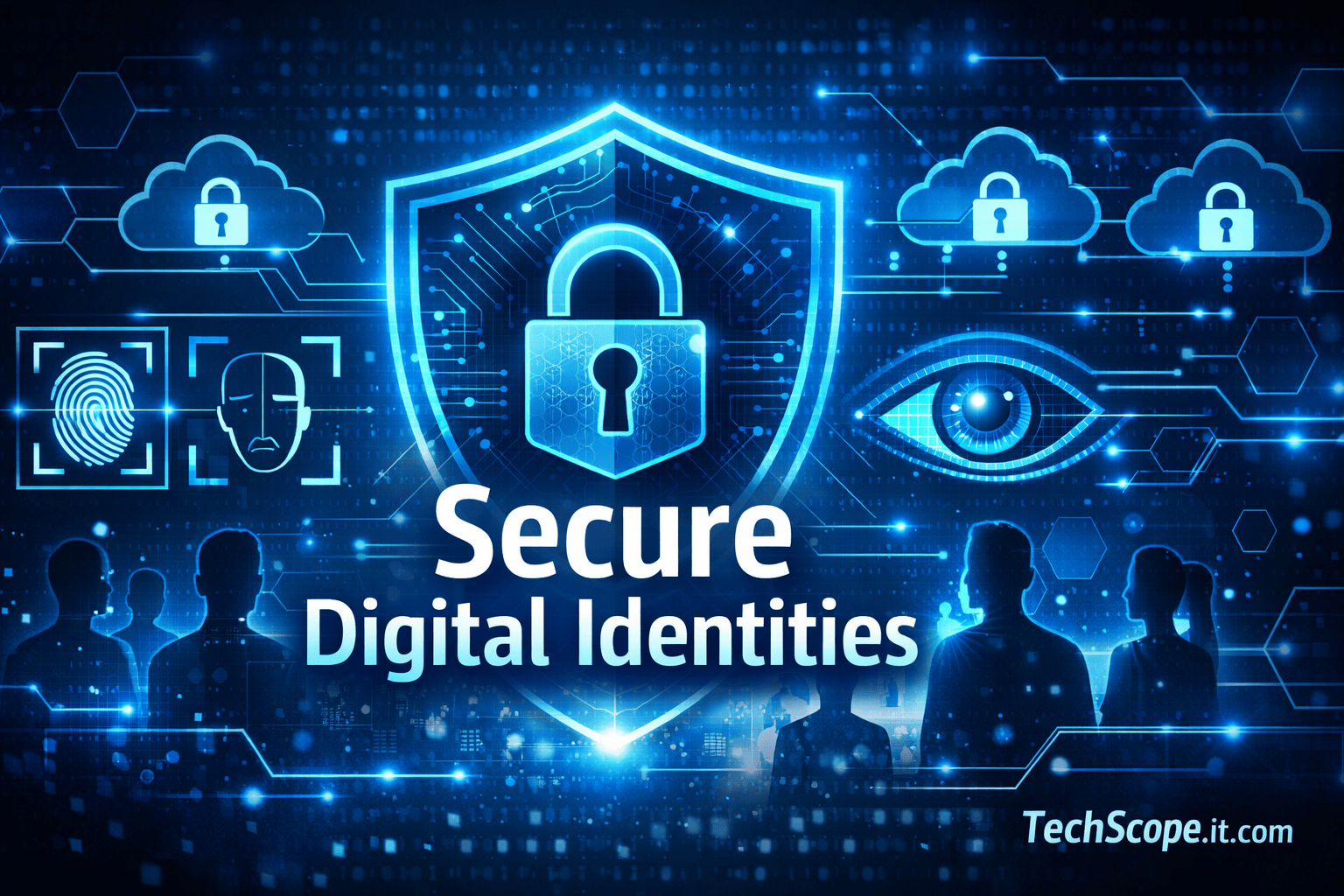
Identity and Access Management (IAM) 2026: Securing Digital Identities in a Zero-Trust World
The digital ecosystem in 2026 is more interconnected, cloud-driven, and identity-centric than ever before. Organizations now operate across hybrid infrastructures, remote workforces, SaaS platforms, AI-powered applications, and mobile environments. While this transformation improves scalability and productivity, it also shifts the cybersecurity battleground—from networks to identities.
Attackers no longer need to break firewalls when stolen credentials, weak authentication, and excessive access permissions can grant them silent entry. This is why Identity and Access Management has become the backbone of modern cybersecurity and a critical enabler of zero-trust security models.
As highlighted in Ransomware Defense Strategies 2026, identity compromise is now one of the most common initial attack vectors, making IAM a frontline defense rather than a supporting tool.
Table of Contents
What Is Identity and Access Management (IAM)?
Short answer: Identity and Access Management ensures that the right individuals and systems can access the right resources at the right time—and nothing more.
In practice, Identity and Access Management is a framework of policies, technologies, and processes used to manage digital identities, authenticate users, authorize access, and monitor behavior across systems. IAM governs how identities are created, verified, granted permissions, reviewed, and eventually revoked.
According to Microsoft’s security guidance on what is Identity and Access Management (IAM), modern IAM solutions help organizations reduce credential-based attacks by enforcing strong authentication, least-privilege access, and continuous identity monitoring across cloud and hybrid environments.
Modern IAM platforms in 2026 go far beyond usernames and passwords. They incorporate adaptive authentication, passwordless access, AI-driven risk analysis, and automated identity lifecycle management—capabilities essential for securing today’s complex digital environments.
These protections are especially important as users increasingly access sensitive systems through personal and mobile devices, reinforcing the identity protection principles discussed in Secure Personal Data on Smartphones 2026.
Why Identity and Access Management Is Critical in a Zero-Trust World
Zero trust operates on a simple but powerful principle: never trust, always verify. No user, device, or application is inherently trusted—whether inside or outside the network perimeter.
So how is zero trust enforced in real environments? Through Identity and Access Management.
IAM becomes the decision engine of zero trust by continuously validating identity, device health, user behavior, and contextual signals before granting or maintaining access. Instead of relying on network location, IAM evaluates who is requesting access, how they are behaving, and whether the request aligns with security policies.
This shift mirrors broader digital intelligence trends explored in AI in Everyday Life, where systems adapt dynamically based on real-time data rather than static rules.
Core Components of Identity and Access Management
A mature Identity and Access Management strategy in 2026 includes several tightly integrated components:
Identity Lifecycle Management
Manages user identities from onboarding to offboarding, ensuring access is automatically provisioned and revoked based on role changes or employment status.
Authentication
Verifies who the user is using methods such as multi-factor authentication (MFA), biometrics, hardware keys, or passwordless login.
Authorization
Defines what users can access using role-based access control (RBAC), attribute-based access control (ABAC), or policy-based access models.
Privileged Access Management (PAM)
Protects high-risk accounts such as administrators, DevOps engineers, and service accounts with enhanced controls and monitoring.
Identity Governance and Administration (IGA)
Ensures compliance through access reviews, auditing, reporting, and policy enforcement.
Together, these components reduce unauthorized access while maintaining productivity in fast-moving environments.
IAM vs Traditional Security Models
Traditional security focused on perimeter defenses—firewalls, VPNs, and internal network trust. Once attackers breached the perimeter, they often gained broad internal access.
Identity and Access Management eliminates this assumption of trust. Every access request is evaluated individually, regardless of location. This approach drastically limits lateral movement and blast radius during breaches.
As identity-based attacks rise, IAM proves more effective than legacy models that were never designed for cloud-native, remote-first operations.
IAM in Cloud, Hybrid, and Remote Work Environments
Cloud adoption has dissolved traditional network boundaries. Employees now log in from multiple devices, locations, and networks—often simultaneously.
IAM enables centralized control across these distributed environments by enforcing consistent authentication and access policies regardless of infrastructure. Cloud-native IAM platforms integrate directly with SaaS applications, APIs, and hybrid workloads.
This unified access control is essential for securing remote teams, contractors, and third-party vendors without sacrificing agility.
AI and Automation in Identity and Access Management (2026 Trends)
Artificial intelligence has become a game-changer for Identity and Access Management.
AI-powered IAM systems can:
- Detect anomalous login behavior
- Apply risk-based authentication dynamically
- Predict identity misuse before breaches occur
- Automate access reviews and compliance tasks
By analyzing patterns across millions of signals, AI-driven IAM transforms identity security from reactive to predictive—aligning with enterprise-wide automation strategies shaping modern digital systems.
Benefits of Identity and Access Management
Implementing a strong IAM strategy delivers measurable benefits:
- Reduced risk of breaches and insider threats
- Improved regulatory compliance (GDPR, ISO, SOC 2)
- Enhanced user experience with passwordless access
- Faster onboarding and offboarding
- Better visibility into access behavior
IAM enables organizations to scale securely while maintaining trust and accountability.
Risks, Challenges, and Common IAM Mistakes
Despite its advantages, IAM implementations often fail due to:
- Overprivileged accounts
- Poor identity governance
- Weak integration planning
- Inconsistent policy enforcement
- Lack of continuous monitoring
Organizations must treat IAM as an evolving program—not a one-time deployment—to avoid creating new attack surfaces.
Best Practices for Implementing IAM in 2026
Successful IAM deployments follow these principles:
- Enforce least-privilege access by default
- Use passwordless and phishing-resistant authentication
- Continuously monitor and reassess access
- Automate identity lifecycle processes
- Integrate IAM with zero-trust frameworks
These practices ensure IAM remains effective as threats and technologies evolve.
Real-World Use Cases of Identity and Access Management
- Healthcare: Protects patient data and ensures compliance
- Finance: Secures digital transactions and privileged access
- SaaS Companies: Manages customer and employee identities
- Enterprises: Controls hybrid workforce access at scale
In each case, IAM serves as the foundation for digital trust.
The Future of Identity and Access Management Beyond 2026
Looking ahead, IAM will evolve toward:
- Decentralized and self-sovereign identities
- Advanced biometrics and behavioral authentication
- Deeper AI-native access control
- Tighter zero-trust integration
Identity will remain the primary control point for cybersecurity strategies well beyond 2026.
Frequently Asked Questions (FAQ)
What is Identity and Access Management?
Identity and Access Management is a security framework that controls who can access systems, data, and applications.
How does IAM support zero-trust security?
IAM enforces continuous identity verification, which is central to zero-trust principles.
Is IAM only for large enterprises?
No. IAM solutions scale for small businesses, startups, and enterprises alike.
Can IAM prevent ransomware attacks?
IAM reduces ransomware risk by limiting unauthorized access and credential misuse.
What are future trends in IAM?
AI-driven access control, passwordless authentication, and decentralized identity models.
Final Thoughts
In 2026, cybersecurity is no longer about protecting networks—it’s about protecting identities. Identity and Access Management has become the foundation of zero-trust security, enabling organizations to operate securely in a borderless digital world.
As threats grow smarter and environments more complex, IAM ensures that trust is earned, verified, and continuously enforced—one identity at a time.