Digital Twins 2026: How Virtual Replicas Are Transforming Industry, Healthcare, and Smart Cities
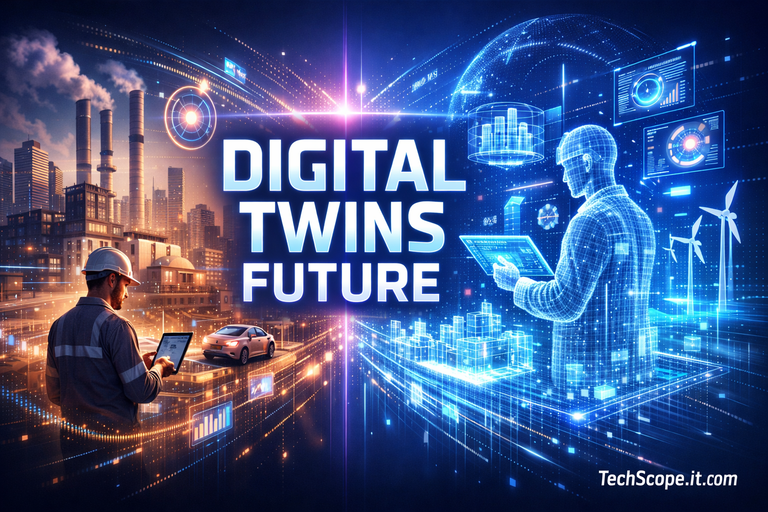
The digital world is no longer separate from the physical one. In 2026, organizations are increasingly blending real-world systems with intelligent virtual replicas that learn, adapt, and evolve in real time. This convergence is driven by Digital Twins 2026, a technology that enables businesses, governments, and institutions to simulate reality before making costly or risky decisions.
Unlike traditional simulations that rely on static data, digital twins remain continuously synchronized with their physical counterparts. Powered by IoT sensors, artificial intelligence, cloud computing, and advanced analytics, digital twins allow organizations to predict outcomes, optimize performance, and uncover insights that were previously impossible.
As industries face rising complexity, sustainability demands, and operational risks, digital twins are becoming a foundational layer of modern digital infrastructure.
Table of Contents
What Are Digital Twins and Why Do They Matter in 2026?
What exactly is a digital twin, and why has it become essential now?
A digital twin is a dynamic virtual replica of a physical object, system, or process that updates continuously using real-time data. In 2026, digital twins matter because they shift decision-making from reactive to predictive, enabling organizations to simulate outcomes before acting in the real world.
Earlier digital models offered snapshots of reality. Digital Twins 2026 offer living systems. These twins evolve as conditions change, reflecting performance, stress, behavior, and external variables instantly. This capability makes them invaluable in environments where downtime, inefficiency, or miscalculations carry high costs.
Digital twins are now widely used to monitor infrastructure, optimize manufacturing, improve patient care, and design smarter cities.
How Digital Twins Work: Data, IoT, AI, and Simulation
How do digital twins actually function behind the scenes?
Digital twins operate through a continuous feedback loop that connects the physical and digital worlds using data, analytics, and simulation engines.
IoT Sensors and Real-Time Data Streams
Sensors embedded in machines, buildings, vehicles, and infrastructure capture live data such as temperature, pressure, movement, energy usage, and wear. This data feeds the digital twin, ensuring it mirrors real-world conditions accurately.
In urban environments, digital twins rely on the same connected infrastructure that powers modern cities. These systems closely align with the connected ecosystems described in Smart Cities 2026, where sensors and data networks enable responsive, adaptive urban planning.
Artificial Intelligence and Predictive Intelligence
AI transforms raw data into actionable insight. Machine learning models analyze trends, detect anomalies, predict failures, and recommend optimizations. Over time, the digital twin becomes smarter, learning from outcomes and refining its predictions.
This intelligence mirrors how AI already influences everyday decisions, from smart homes to workplace automation, as explored in AI in Everyday Life.
Simulation and Scenario Testing
Digital twins allow organizations to test scenarios virtually—changing variables, introducing stress conditions, or simulating failures—without risking physical assets. This capability is one of the strongest advantages of Digital Twins 2026.
Digital Twin Platforms and Technology Providers
Who builds and powers modern digital twins?
Leading technology companies now offer full-scale digital twin platforms that combine hardware, software, analytics, and visualization.
Many modern digital twin providers—including Siemens, General Electric, Nvidia, IBM, Bentley, and Microsoft—offer integrated ecosystems. These platforms may include sensor kits, data processors, synchronization services, simulation engines, analytics layers, and interactive dashboards.
IBM, for example, emphasizes insight-driven decision-making through advanced data visualization tools that help organizations understand complex systems in real time and communicate insights clearly across teams.
Enterprises with specialized needs may choose modular approaches, selecting best-in-class tools rather than full-stack solutions.
Industrial Applications of Digital Twins in 2026
How are industries using digital twins today?
Digital twins have become a core technology in manufacturing, energy, logistics, and construction.
In manufacturing, digital twins simulate production lines, predict machine failures, and optimize workflows. Instead of shutting down equipment unexpectedly, companies now schedule maintenance based on predictive insights.
Energy companies use digital twins to monitor power plants, wind farms, and smart grids, improving efficiency while reducing environmental impact. These advancements align with broader innovation patterns shaping the global economy, as discussed in Technology Trends 2026.
Construction firms use digital twins to test building designs, assess structural integrity, and monitor projects throughout their lifecycle, significantly reducing delays and cost overruns.
Digital Twins in Healthcare and Life Sciences
Can digital twins improve healthcare outcomes?
Healthcare is one of the most promising frontiers for Digital Twins 2026.
Hospitals use digital twins to model patient flow, optimize staffing, and improve operational efficiency. On a clinical level, digital twins can simulate organs, treatment plans, and disease progression, supporting personalized medicine.
Digital twins increasingly align with advances in healthcare technology, allowing clinicians to test treatment strategies virtually before applying them to real patients. This reduces risk, improves outcomes, and supports data-driven medical decisions.
In pharmaceutical research, digital twins accelerate drug development by simulating biological responses, reducing time-to-market for life-saving therapies.
Smart Cities and Urban Digital Twins
Why are cities adopting digital twins?
Urban digital twins allow city planners to simulate traffic, energy usage, population growth, and disaster scenarios before implementing changes in the physical world.
City-scale digital twins help governments reduce congestion, improve sustainability, and enhance public safety. Traffic patterns can be adjusted virtually, energy demand forecasted accurately, and emergency responses tested before real-world deployment.
This systemic approach reflects the broader transformation outlined in Future of Technology 2026, where interconnected systems replace isolated planning methods.
What Can Digital Twins Represent?
What types of assets can be digitally replicated?
Digital twins can represent virtually any physical or conceptual entity.
They may model buildings, bridges, vehicles, aircraft, factories, and even entire cities. They can also simulate complex systems such as traffic networks, climate behavior, supply chains, and healthcare workflows.
In more experimental applications, digital twins may replicate human behavior—modeling voice, appearance, and personality traits for research, training, or virtual environments. This versatility makes Digital Twins 2026 one of the most adaptable technologies of the decade.
Benefits of Digital Twins for Businesses and Governments
What advantages do digital twins deliver?
Digital twins provide measurable value across sectors:
- Predictive maintenance and reduced downtime
- Lower operational costs and resource waste
- Faster innovation through virtual testing
- Improved safety and risk management
- Data-driven strategic planning
By testing decisions virtually, organizations minimize uncertainty while maximizing efficiency.
Challenges, Risks, and Ethical Concerns
What challenges come with digital twins?
Despite their advantages, digital twins raise important concerns.
Data privacy is a major issue, especially when modeling individuals or critical infrastructure. Cybersecurity risks increase as digital twins become deeply connected to real-world systems. Model accuracy is also critical—flawed data leads to flawed predictions.
Ethical considerations around surveillance, consent, and digital identity will play an increasing role as digital twins become more human-centric.
Future Trends for Digital Twins Beyond 2026
Where is digital twin technology heading next?
The future points toward autonomous digital twins that self-optimize without human intervention. Integration with AI agents, metaverse platforms, and immersive visualization will expand their reach.
As computing power grows and sensors become ubiquitous, digital twins will evolve from decision-support tools into intelligent collaborators that continuously refine systems in real time.
FAQs About Digital Twins 2026
What is a digital twin in simple terms?
A digital twin is a live virtual copy of a real-world object or system that updates continuously using real-time data.
How are digital twins used in smart cities?
They simulate traffic, infrastructure, energy use, and emergencies to improve urban planning and sustainability.
Are digital twins expensive to implement?
Costs vary, but cloud platforms and modular tools are making digital twins more accessible than ever.
How do digital twins differ from simulations?
Simulations are static; digital twins update continuously and evolve with real-world conditions.
Will digital twins integrate with the metaverse?
Yes. Digital twins are expected to form the backbone of realistic, data-driven virtual environments.
Conclusion
Digital Twins 2026 represent a fundamental shift in how humanity designs, manages, and understands complex systems. By bridging the physical and digital worlds, they empower smarter decisions, safer operations, and more sustainable innovation—reshaping industries, healthcare, and cities for the future.