Digital Wallets & Biometric Payments 2026: How Cashless Technology Is Redefining Security and Convenience
The way people pay for everyday goods and services is changing faster than ever. Traditional cash and plastic cards are gradually giving way to digital wallets and biometric payment systems designed for greater speed, stronger security, and effortless convenience. By 2026, this transformation goes beyond simple ease of use — it reflects the rise of identity-driven finance, where personal biometric features such as fingerprints, facial recognition, or voice patterns are becoming the secure gateway to accessing and managing money.
From smartphones and smartwatches to facial recognition scanners and fingerprint-enabled terminals, digital wallets and biometric payments are redefining how trust is established in financial transactions. This evolution mirrors the rise of intelligent systems discussed in Next-Generation Gadgets 2026, where technology no longer waits for instructions but actively manages daily life.
Table of Contents
What Are Digital Wallets & Biometric Payments in 2026?
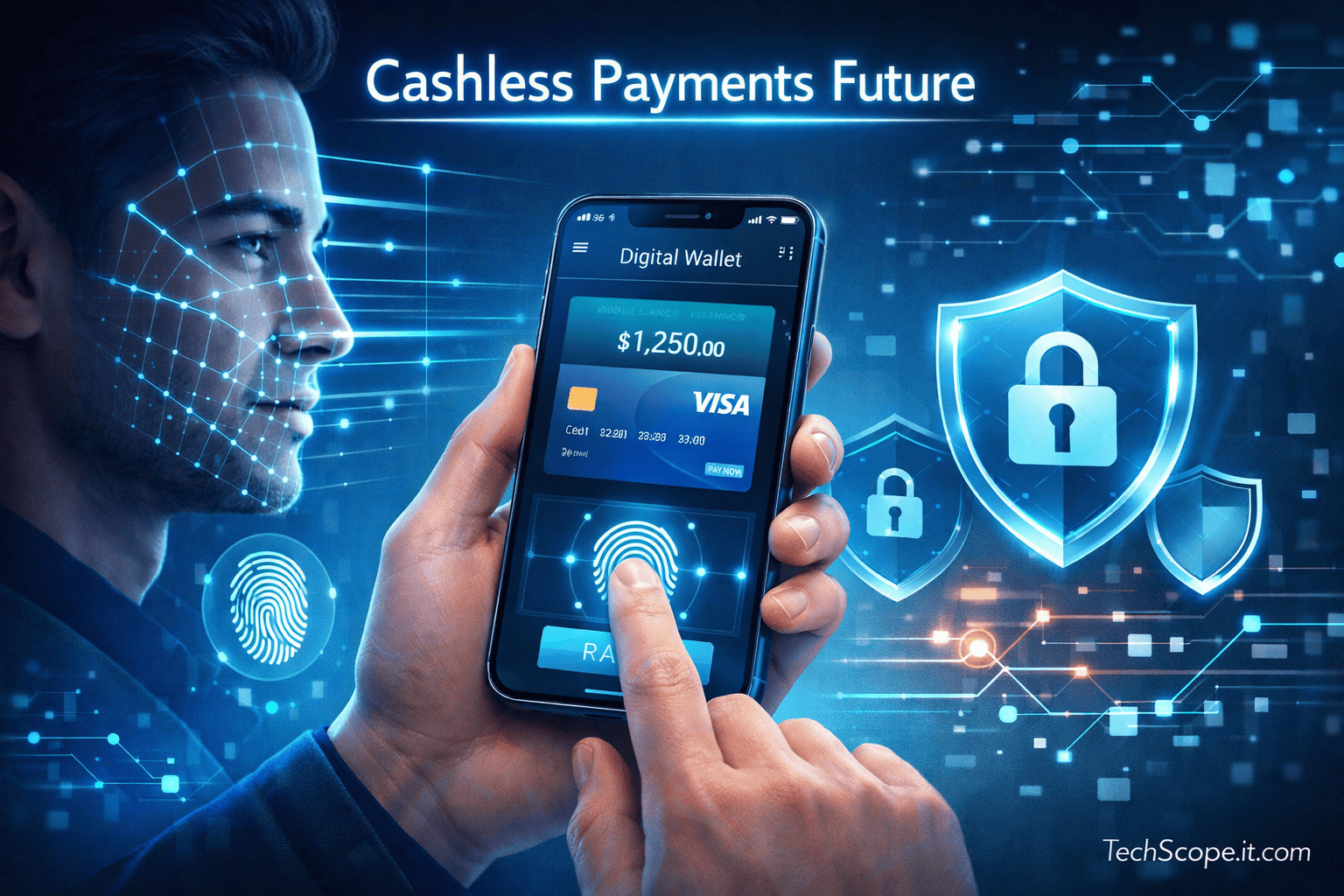
Digital Wallets & Biometric Payments 2026 represent the convergence of cloud-based financial platforms and identity authentication technologies. Digital wallets securely store payment credentials, while biometric systems verify users through fingerprints, facial features, voice patterns, or behavioral traits.
Instead of relying on passwords, PINs, or physical cards, transactions are approved by who you are, not what you carry. This identity-centric approach dramatically reduces fraud, improves speed, and simplifies everyday payments.
How Biometric Authentication Powers Cashless Payments
Biometric payments rely on sensors and AI algorithms that capture, encrypt, and compare biological data in real time. When a user initiates a transaction, the system verifies their identity against a stored biometric template rather than a reusable credential.
This process is powered by artificial intelligence models similar to those shaping automation and decision-making in AI in Everyday Life, where systems learn patterns, detect anomalies, and improve accuracy continuously.
Types of Biometric Payments Used in 2026
Fingerprint Authentication
Still the most widely used method, fingerprint payments are fast, affordable, and highly accurate. They are common in smartphones, payment terminals, and banking apps.
Facial Recognition Payments
Facial biometrics enable hands-free payments using advanced cameras and depth sensors. These systems are increasingly popular in retail stores, airports, and transit systems.
Voice-Based Authentication
Voice biometrics verify users by analyzing tone, pitch, and speech patterns. This method is especially useful for phone banking and smart assistant payments.
Behavioral Biometrics
Typing rhythm, touch pressure, walking gait, and interaction patterns add an invisible security layer that works continuously in the background.
Why Digital Wallets Are Replacing Physical Cards
Digital wallets have evolved far beyond simple payment tools. In 2026, they function as financial identity hubs, storing:
- Payment cards and bank accounts
- Government IDs and licenses
- Travel passes and boarding cards
- Loyalty points and digital tickets
However, as wallets centralize sensitive data, security becomes critical. Best practices for protecting wallet data align closely with the strategies outlined in Secure Personal Data on Smartphones 2026, where encryption, device-level authentication, and access controls play a vital role.
Security Benefits of Biometric Payments
Biometric payments significantly outperform traditional methods in fraud prevention because biometric traits:
- Cannot be guessed or reused
- Are extremely difficult to replicate
- Are verified in real time
According to IBM’s analysis of digital identity systems, biometric authentication reduces identity theft by eliminating static credentials like passwords and PINs, which are common attack vectors, as explained in IBM Think’s guide on digital identity.
Convenience Advantages for Everyday Users
Biometric payments remove friction from everyday transactions:
- No passwords to remember
- No cards to carry or lose
- Faster checkout and authorization
- Seamless cross-device authentication
For users, this means smoother experiences in retail stores, online shopping, public transport, and international travel.
Real-World Use Cases of Digital Wallets & Biometrics
Retail and E-Commerce
Shoppers can pay instantly with a fingerprint or face scan, reducing checkout time and fraud.
Banking and Finance
Banks use biometrics to secure account access, approve transactions, and detect suspicious behavior.
Travel and Transportation
Airports use facial recognition for boarding, while transit systems enable biometric ticketing.
Healthcare and Insurance
Biometric payments verify patient identity, reducing billing errors and insurance fraud.
Risks, Privacy Concerns, and Ethical Challenges
Despite their advantages, biometric payments raise important concerns:
- What happens if biometric data is compromised?
- Who owns and controls biometric identity data?
- Can users opt out without losing access to services?
Addressing these challenges requires strong regulation, transparent policies, and user consent frameworks.
How to Use Digital Wallets Safely in 2026
To maximize security:
- Enable multi-layer biometric authentication
- Keep devices updated with the latest security patches
- Avoid public Wi-Fi for financial transactions
- Review wallet permissions regularly
Responsible usage is key to enjoying the benefits of cashless technology without compromising privacy.
Digital Wallets vs Traditional Payment Methods
| Feature | Traditional Cards | Digital Wallets & Biometrics |
|---|---|---|
| Security | Medium | Very High |
| Speed | Moderate | Instant |
| Fraud Risk | Higher | Significantly Lower |
| Convenience | Limited | Seamless |
Future Trends Beyond 2026
The next phase of cashless technology will include:
- Continuous authentication without user action
- AI-driven fraud prevention before transactions occur
- Government-backed digital identity wallets
- Biometric payments integrated into smart cities and IoT devices
The future of finance is not just digital—it is identity-aware.
FAQs (Schema-Friendly)
Are biometric payments safe?
Yes, when combined with encryption and secure hardware, they are safer than traditional methods.
Can biometric data be hacked?
While no system is perfect, biometric templates are encrypted and far harder to exploit than passwords.
Will cash disappear completely?
Cash usage will decline, but it may coexist with digital payments for years.
Final Thoughts
Digital Wallets & Biometric Payments 2026 represent a fundamental shift in how money, identity, and trust intersect. As cashless technology matures, it promises faster transactions, stronger security, and unprecedented convenience—reshaping everyday life in ways that were once science fiction.
For individuals and businesses alike, embracing this transformation is no longer optional—it is essential.