Revolutionary Foldable & Flexible Gadgets 2026: Transforming Screens, Phones, and Portable Tech
The consumer electronics industry is undergoing a radical transformation in 2026. Traditional rigid devices are giving way to adaptive, shape-shifting technology that bends, folds, and flexes to match modern lifestyles. Foldable & Flexible Gadgets 2026 are no longer experimental concepts—they are fast becoming mainstream tools that redefine how we interact with screens, phones, and portable technology.
Powered by breakthroughs in flexible OLED displays, ultra-thin glass, and advanced hinge engineering, these devices offer larger screens in compact designs without sacrificing performance. As highlighted in broader innovation movements discussed in Technology Trends 2026, foldable and flexible gadgets represent the next evolutionary step toward user-centric, space-efficient technology.
This comprehensive guide explores how foldable and flexible gadgets work, where they are being used, their benefits and limitations, real-world use cases, and what the future holds beyond 2026.
Table of Contents
What Are Foldable & Flexible Gadgets?
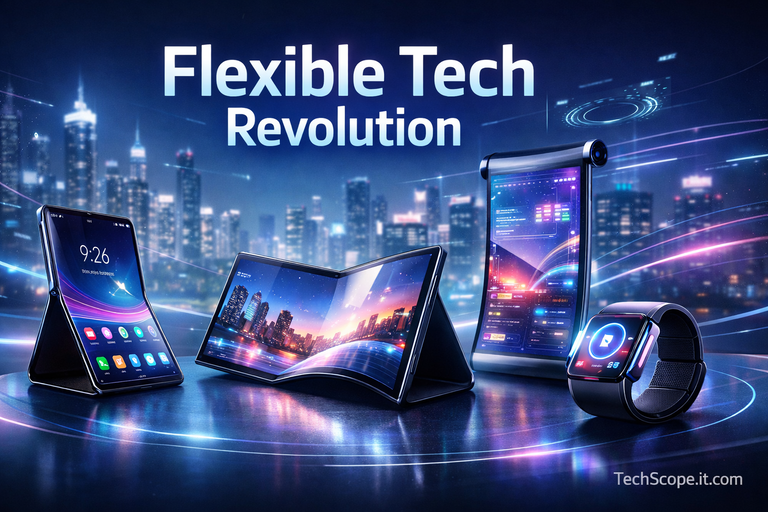
In simple terms, foldable and flexible gadgets are electronic devices designed with bendable displays and adaptable structures that allow screens to fold, roll, or flex without breaking. Unlike traditional flat screens, these devices adjust their form factor based on how users want to interact with them.
Foldable gadgets typically rely on engineered hinge mechanisms that allow screens to open and close like a book, while flexible gadgets use soft substrates that can bend or roll continuously. Both approaches aim to solve the same challenge: delivering larger displays without increasing device size.
As consumer demand shifts toward portability and multitasking, manufacturers are increasingly focusing on adaptive designs regularly featured in Latest Technology News 2026.
The Core Technologies Powering Foldable & Flexible Gadgets 2026
What makes foldable innovation possible in 2026? A combination of material science, miniaturization, and advanced display engineering has enabled devices to bend while maintaining durability and performance.
Flexible OLED Displays and Ultra-Thin Glass
Flexible OLED panels are the foundation of foldable gadgets. These displays deliver vibrant colors, deep contrast, and high refresh rates while being thin enough to bend. Ultra-thin glass coatings now protect these screens from scratches and pressure damage, significantly improving longevity.
Industry analysts suggest that foldable and modular devices are moving closer to mainstream adoption as durability, hinge reliability, and software optimization continue to improve, according to insights shared by TechTimes.
Advanced Hinges, Rollable Screens, and Structural Frames
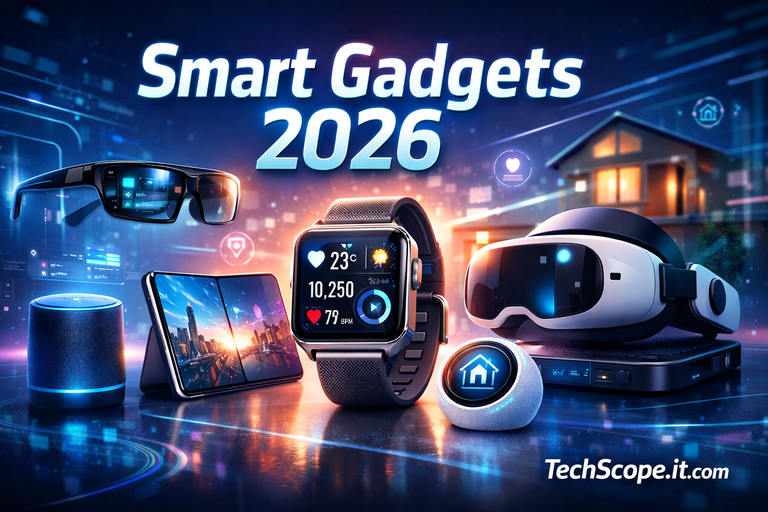
Modern hinge systems are engineered to withstand hundreds of thousands of folds without mechanical failure. Some manufacturers are moving beyond hinges altogether, developing rollable screens that expand vertically or horizontally on demand—an innovation wave aligned with devices showcased in Smart Gadgets 2026.
Foldable Smartphones and Tablets in 2026
How have foldable phones evolved in 2026? What once felt like a novelty is now a serious productivity and entertainment platform.
Foldable smartphones now offer tablet-sized displays that fit comfortably in a pocket when closed. These devices support advanced multitasking, split-screen workflows, and drag-and-drop functionality that rivals laptops for light professional tasks.
Productivity and App Optimization
Operating systems in 2026 are optimized specifically for foldable displays. Apps dynamically adjust layouts, enabling seamless transitions between phone and tablet modes. Professionals benefit from larger workspaces, enhanced document editing, and improved content consumption.
Pricing and Consumer Adoption
As manufacturing scales and competition increases, foldable smartphones have become more affordable. Mid-range foldables are now accessible to a broader audience, accelerating adoption rates across global markets—a trend consistently tracked in Latest Technology News 2026.
Flexible Gadgets Beyond Phones
Are foldable gadgets limited to smartphones? Absolutely not. Flexible display technology is reshaping multiple product categories.
Rollable Laptops and Expandable Monitors
Rollable laptops allow users to expand screen height for multitasking while maintaining compact portability. Designers, developers, and remote workers benefit from adaptable screen real estate without carrying external monitors, reinforcing trends explored in Technology Trends 2026.
Wearables, Automotive Displays, and Smart Accessories
Flexible screens are revolutionizing wearables by making devices lighter, more ergonomic, and more immersive. In vehicles, curved and flexible dashboards provide seamless digital interfaces that enhance safety and user experience.
Key Benefits of Foldable & Flexible Gadgets 2026
Why are consumers embracing foldable technology? The advantages go beyond aesthetics.
- Enhanced Portability: Larger screens without bulky designs
- Improved Multitasking: Multiple apps and workflows on a single device
- Immersive Entertainment: Expanded displays for gaming and streaming
- Future-Ready Design: Devices that adapt to evolving usage patterns
These benefits make foldable gadgets especially appealing to professionals, creatives, and tech enthusiasts seeking versatility.
Challenges and Limitations Still Facing Foldable Gadgets
Despite rapid progress, foldable gadgets are not without challenges. Durability concerns, higher repair costs, and long-term reliability remain key considerations.
Flexible displays, while stronger than before, are still more delicate than traditional glass screens. Repairs can be expensive, and software optimization continues to evolve. However, ongoing improvements and testing—frequently reported in Latest Technology News 2026—suggest these issues are steadily diminishing.
Real-World Use Cases and Industry Adoption
How are people actually using foldable gadgets in daily life? Adoption is expanding across industries.
- Business professionals use foldable phones for presentations and mobile productivity
- Content creators benefit from larger editing surfaces on the go
- Gamers and streamers enjoy immersive visuals in compact devices
These real-world applications reflect how foldable technology aligns with evolving digital lifestyles, complementing innovations featured in Smart Gadgets 2026.
Future Trends: What Comes After Foldable & Flexible Gadgets 2026?
What does the future hold beyond 2026? Expect even thinner materials, improved battery flexibility, AI-driven interface adaptation, and wider adoption across TVs, wearables, and smart environments.
As foldable devices mature, they will integrate deeper into everyday life, becoming standard rather than premium offerings. This evolution will play a critical role in shaping the broader digital ecosystem outlined in Technology Trends 2026.
FAQs: Foldable & Flexible Gadgets 2026
Are foldable gadgets durable enough for daily use?
Yes. Modern devices are tested for thousands of folds, though careful handling is still recommended.
Are foldable phones worth buying in 2026?
For users who value multitasking, portability, and immersive screens, foldable phones offer strong value.
Will flexible gadgets replace traditional devices?
They are more likely to complement rather than completely replace traditional gadgets in the near future.
Conclusion: Are Foldable & Flexible Gadgets the Future?
Foldable and flexible gadgets are no longer experimental—they are a defining feature of modern consumer technology. Foldable & Flexible Gadgets 2026 showcase how innovation can merge portability, productivity, and immersive experiences into adaptable devices designed for real-world use.
As durability improves, prices decrease, and software matures, these gadgets are poised to become mainstream essentials rather than niche products. For consumers and businesses alike, the future of screens, phones, and portable tech is flexible—and it’s already unfolding.