Next-Gen Edge Computing 2026: The Powerful Technology Driving Faster AI, IoT, and Real-Time Decisions
The digital world is changing faster than centralized systems can handle. Every second, billions of devices generate massive streams of data—from smart sensors and autonomous machines to AI-powered consumer applications. Sending all this information to distant cloud servers is no longer practical. Latency, bandwidth costs, privacy concerns, and reliability issues are pushing organizations toward a new solution.
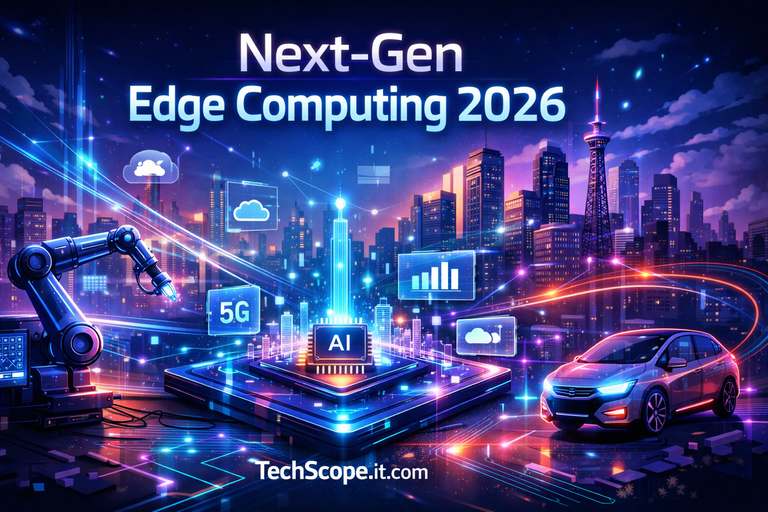
Next-Gen Edge Computing 2026 represents this shift. Instead of relying solely on centralized data centers, computing intelligence is moving closer to where data is created. This evolution enables real-time decision-making, faster AI responses, resilient systems, and smarter IoT ecosystems. Edge computing is no longer a performance upgrade—it’s becoming the backbone of modern digital infrastructure.
Table of Contents
What Is Next-Gen Edge Computing 2026?
Short answer: It’s edge computing with intelligence, autonomy, and scale.
Traditional edge systems focused on basic data filtering and local processing. In 2026, edge computing goes far beyond that.
Next-generation edge computing combines:
- AI inference directly on edge devices
- Distributed micro data centers
- Intelligent orchestration across thousands of nodes
- Secure, privacy-first architectures
Instead of simply relaying data, edge systems analyze, decide, and act independently. These intelligent nodes operate even when cloud connectivity is limited, enabling uninterrupted performance in critical environments such as healthcare, manufacturing, and smart cities.
Edge Computing vs Cloud Computing: A Cooperative Future
Is edge computing replacing the cloud?
No—but it is redefining its role.
In 2026, the most effective digital architectures are hybrid. The cloud handles large-scale analytics, long-term storage, and global coordination, while edge computing manages real-time tasks where milliseconds matter.
This division of labor allows organizations to:
- Reduce latency dramatically
- Lower data transmission costs
- Improve system reliability
- Enhance privacy and compliance
As discussed in Future of Technology 2026, decentralized intelligence is becoming essential as digital systems grow more complex and autonomous.
Edge AI: Bringing Intelligence Directly to Devices
Why is AI moving to the edge?
Because intelligence is most valuable when it’s immediate.
Edge AI allows machine learning models to run directly on devices such as cameras, sensors, gateways, and industrial machines. This eliminates delays caused by cloud processing and enables faster, safer decisions.
Real-world examples of Edge AI:
- Manufacturing systems detecting defects instantly
- Autonomous vehicles reacting to road conditions in real time
- Smart cameras identifying security threats locally
- Voice assistants functioning offline
These applications mirror everyday experiences already explored in AI in Everyday Life, where intelligence operates seamlessly without users noticing the underlying complexity.
IoT and Edge Computing: Scaling Without Breaking Networks
How does edge computing unlock IoT’s full potential?
IoT devices generate enormous volumes of continuous data. Without edge processing, networks become overloaded and slow.
Edge computing solves this by:
- Processing sensor data locally
- Filtering irrelevant information before transmission
- Enabling immediate responses without cloud dependency
This approach is essential for smart factories, connected healthcare systems, and intelligent infrastructure. As highlighted in Technology Trends 2026, IoT growth depends heavily on edge-based intelligence to remain scalable and cost-effective.
Industry Use Cases: Where Next-Gen Edge Computing Delivers Real Impact
Manufacturing and Industry 4.0
Factories use edge systems to monitor equipment health, optimize workflows, and prevent downtime. AI-powered quality control systems detect issues instantly, reducing waste and improving safety.
Healthcare and Medical Technology
Edge computing enables real-time patient monitoring, on-device diagnostics, and faster emergency responses—especially critical when connectivity is unreliable or data privacy is essential.
Retail and Customer Experience
Retailers use edge AI to analyze customer behavior, manage inventory in real time, and personalize in-store experiences without relying on cloud latency.
Smart Cities and Infrastructure
Traffic systems, energy grids, and public safety networks rely on edge computing for instant decision-making. These systems must operate continuously, even during network disruptions.
Many of these applications align with the intelligent infrastructure models discussed in Future of Technology 2026.
Security, Privacy, and Trust in Edge Environments
Does edge computing improve security or create new risks?
The answer is both.
On one hand, local data processing reduces exposure by minimizing data transmission. On the other, distributed systems increase the attack surface if not properly secured.
Key security strategies in 2026 include:
- Zero-trust architectures
- Hardware-level encryption
- Secure device authentication
- Decentralized identity management
According to industry analysts, modern platforms are prioritizing secure-by-design architectures, as explained in this expert overview of edge computing trends in 2026 from SoftTunedTech.
Challenges and Limitations of Edge Computing in 2026
Despite rapid adoption, edge computing still faces obstacles:
- Managing thousands of distributed nodes
- Interoperability between vendors and platforms
- Higher upfront infrastructure costs
- Shortage of edge-native development skills
Organizations that succeed treat edge computing as a long-term strategy rather than a quick deployment. Proper planning, standardization, and security frameworks are essential.
The Future of Next-Gen Edge Computing Beyond 2026
Edge computing is moving toward:
- Autonomous self-healing systems
- Deeper integration with robotics and AI
- Smarter orchestration powered by machine learning
- Seamless collaboration with 5G and future networks
As intelligence spreads across devices and environments, edge computing will become invisible—embedded into everything from cities and factories to homes and vehicles.
FAQs: Next-Gen Edge Computing 2026
What makes next-gen edge computing different from traditional edge models?
It integrates AI, intelligent orchestration, and autonomous decision-making rather than basic data filtering.
Is edge computing suitable for small businesses?
Yes. Modular edge platforms allow small organizations to deploy targeted solutions without massive infrastructure investments.
How does edge computing support AI and IoT growth?
By enabling real-time processing, reducing latency, and scaling device ecosystems efficiently.
What are the biggest risks of edge computing?
Security management, interoperability issues, and operational complexity if systems are poorly designed.
Conclusion: Why Next-Gen Edge Computing 2026 Is a Strategic Advantage
Edge computing is no longer optional. In 2026, it is the foundation of real-time intelligence, resilient systems, and scalable digital innovation. Organizations that embrace Next-Gen Edge Computing 2026 gain faster AI responses, smarter IoT ecosystems, stronger privacy, and the flexibility needed to compete in an increasingly connected world.
The future of computing isn’t centralized—it’s distributed, intelligent, and happening at the edge.