Portable Power Stations 2026: Powerful Gadgets for Travel, Emergencies, and Off-Grid Living
Portable Power Stations 2026 represent a new generation of intelligent, eco-friendly energy systems designed to deliver reliable electricity wherever traditional power sources fail or cannot reach. These compact yet powerful gadgets store electrical energy in advanced lithium batteries and distribute it through multiple output ports, replacing noisy fuel generators with clean, silent, and highly efficient alternatives.
As smart lifestyles continue to evolve, energy independence is now considered a core technology trend. This transformation reflects broader innovations discussed in Smart Gadgets 2026, where mobility, sustainability, and intelligent automation are reshaping how people power their devices, homes, and outdoor experiences.
From travelers and digital nomads to emergency responders and off-grid homeowners, Portable Power Stations 2026 are redefining how power is generated, stored, and used in everyday life.
Table of Contents
What Are Portable Power Stations and How Do They Work?
Portable Power Stations 2026 are rechargeable battery-powered energy systems that store electricity and provide power through AC outlets, USB ports, DC outputs, and wireless charging surfaces. Unlike traditional generators, they operate silently, produce zero emissions, and require no fuel, making them ideal for indoor, outdoor, and emergency use.
At their core, these devices rely on three key components:
- High-capacity lithium battery packs that store energy
- Pure sine wave inverters that convert DC battery power into usable AC electricity
- Intelligent battery management systems that monitor voltage, temperature, and safety
Their increasing popularity follows the decentralization of energy explored in Technology Trends 2026, where distributed, renewable, and user-controlled power systems are replacing centralized infrastructure in many environments.
Core Technologies Powering Portable Power Stations 2026
Advanced Battery Chemistry and Lifespan
The most significant innovation in Portable Power Stations 2026 is the widespread adoption of Lithium Iron Phosphate (LiFePO4) and emerging solid-state batteries. These chemistries deliver longer lifecycles—often exceeding 4,000 charge cycles—while maintaining superior thermal stability and safety.
Compared to older lithium-ion packs, modern batteries now offer:
- Longer lifespan and reduced degradation
- Higher energy density in smaller footprints
- Improved resistance to overheating and short circuits
Intelligent Inverter Systems and Surge Protection
Modern power stations integrate pure sine wave inverters that safely power sensitive electronics such as laptops, medical devices, cameras, and smart appliances. Intelligent surge protection automatically adjusts output levels, preventing damage to connected equipment during power fluctuations.
Solar Integration and Hybrid Charging
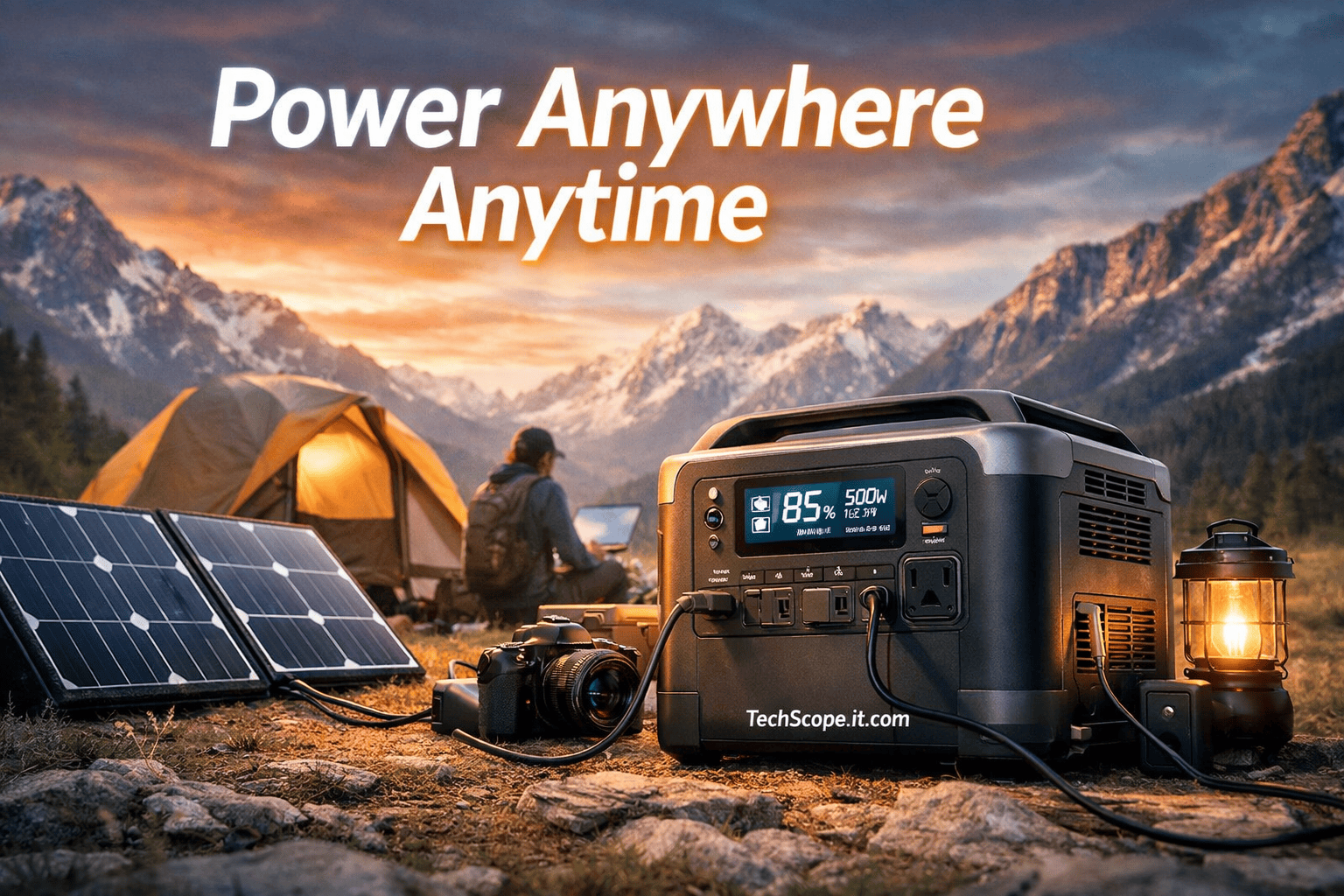
Portable Power Stations 2026 now support high-efficiency solar charging, allowing users to harvest renewable energy directly from portable panels. Hybrid systems combine wall charging, vehicle inputs, and solar arrays for faster and more flexible recharging.
Smart Displays and App-Based Monitoring
Many premium models include touchscreen displays and mobile apps that provide real-time monitoring of:
- Input and output power
- Remaining battery capacity
- Estimated runtime
- Charging efficiency
This intelligent monitoring reflects the same automation principles seen in Smart Kitchen Gadgets 2026, where embedded intelligence continuously optimizes performance and safety.
Key Use Cases: Where Portable Power Stations 2026 Deliver Maximum Value
Travel and Van Life Power Solutions
For travelers, campers, and van lifers, Portable Power Stations 2026 provide clean, silent electricity for:
- Refrigerators and cooking devices
- Laptops and communication equipment
- Lighting and ventilation systems
- Drones, cameras, and GPS units
Unlike gas generators, these systems can be safely used inside vehicles and tents, offering uninterrupted power without noise or fumes.
Emergency Home Backup During Power Outages
During storms, earthquakes, or grid failures, portable power stations function as reliable backup systems. They can power:
- Medical equipment such as CPAP machines
- Refrigerators and freezers
- Routers and communication devices
- Lighting and security systems
Expert reviews from Best Portable Power Stations 2026 highlight how modern units now deliver enough capacity to support essential household circuits for several hours or even days.
Off-Grid Living and Remote Work
Off-grid homes and remote workstations rely heavily on portable energy. Solar-connected power stations now serve as primary power hubs, supporting:
- Work laptops and monitors
- Satellite internet systems
- Water pumps and lighting
- Smart appliances
These systems integrate seamlessly into smart ecosystems similar to those described in Smart Gadgets 2026, enabling automation even in remote environments.
Benefits of Portable Power Stations 2026
Portable Power Stations 2026 offer numerous advantages over traditional generators and backup systems:
- Zero emissions and environmentally friendly operation
- Silent performance, ideal for indoor and nighttime use
- Multiple charging options, including solar, wall, and vehicle
- High safety standards with thermal and voltage protection
- Portability and modular expansion
These benefits align closely with sustainability initiatives outlined in Technology Trends 2026, where clean energy technologies are becoming standard components of modern infrastructure.
Limitations and Risks to Consider
Despite their advantages, Portable Power Stations 2026 still have limitations that buyers must consider carefully.
Battery Capacity Constraints
Unlike permanent generators, portable stations have finite battery capacity. High-power appliances such as heaters or air conditioners may drain batteries rapidly unless paired with large solar arrays or expansion modules.
Charging Time and Environmental Dependence
Solar charging efficiency depends heavily on weather conditions and sunlight availability. In cloudy regions, wall charging remains essential.
Weight and Transport Considerations
High-capacity models can weigh over 40 kilograms, reducing portability for solo travelers or elderly users.
Understanding these trade-offs helps users integrate power stations effectively into broader smart ecosystems like those discussed in Smart Kitchen Gadgets 2026.
How to Choose the Best Portable Power Stations 2026
Capacity vs. Output Power
When selecting a power station, users should evaluate:
- Battery capacity (Wh) for runtime
- Continuous output (W) for appliance compatibility
- Surge rating for startup loads
Port Selection and Expandability
Modern stations offer:
- AC outlets
- USB-C fast charging
- DC vehicle outputs
- Wireless charging pads
Expansion ports allow additional battery modules for extended runtime.
Safety Certifications and Reliability
Always choose models with:
- UL or CE safety certifications
- Advanced battery management systems
- Proven brand reliability
Benchmarking from Best Portable Power Stations 2026 confirms that premium models now exceed 10 years of operational lifespan with proper maintenance.
Real-World Experiences and Practical Use Scenarios
In real emergencies, portable power stations have saved lives by powering oxygen concentrators, insulin coolers, and communication devices during prolonged outages. In professional environments, filmmakers, engineers, and surveyors rely on them to operate tools and computers in remote locations.
These experiences demonstrate how portable energy integrates naturally into intelligent environments similar to those featured in Smart Gadgets 2026, ensuring reliability wherever digital lifestyles travel.
Future Trends Beyond 2026
AI-Driven Energy Optimization
Future stations will automatically predict consumption patterns and adjust charging schedules using machine learning.
Solid-State Battery Commercialization
Solid-state batteries will deliver:
- Higher energy density
- Faster charging
- Near-zero degradation
Grid-Interactive Power Stations
Next-generation systems will communicate with smart grids, selling excess energy back to utilities and balancing household loads dynamically.
These developments reflect the forward-looking energy landscape outlined in Technology Trends 2026.
Frequently Asked Questions
Are Portable Power Stations 2026 safe for indoor use?
Yes. They produce no emissions and include advanced thermal and electrical protections.
Can they replace home generators permanently?
For essential circuits, yes. Whole-home replacement still requires hybrid systems.
How long do batteries last?
Most LiFePO4 batteries last 8–12 years with normal use.
Do I need solar panels?
Not mandatory, but highly recommended for extended off-grid use.
What size is best for emergencies?
A minimum of 1,000–2,000 Wh is ideal for powering refrigerators and medical devices.
Conclusion: Why Portable Power Stations 2026 Are Essential Gadgets
Portable Power Stations 2026 are no longer optional accessories—they are critical infrastructure for modern travel, emergency preparedness, remote work, and sustainable living. With intelligent controls, clean energy, and expanding capacities, these devices are redefining personal power systems worldwide.
As smart ecosystems continue to expand, portable energy will remain at the heart of resilient, connected, and independent digital lifestyles.