Revolutionary Robotics Trends 2026: How AI-Powered Machines Are Transforming Industry and Improving Everyday Life
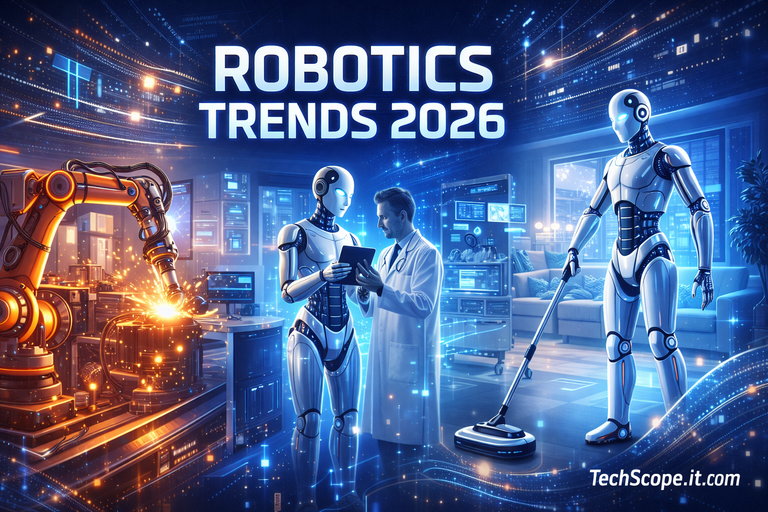
The year 2026 is set to redefine the way humans interact with machines. Robotics Trends 2026 are no longer limited to industrial assembly lines or automated warehouses; AI-powered robots are entering healthcare, homes, public spaces, and offices. They are smarter, more adaptive, and capable of learning from their environments, creating a world where humans and machines collaborate seamlessly. For a broader perspective on AI integration in daily life, see AI in Everyday Life, showing how automation quietly supports work, homes, and personal decisions.
Table of Contents
AI-Driven Robotics: Machines That Learn and Adapt
AI is the engine driving modern robotics. Unlike traditional machines that perform repetitive tasks, AI-powered robots can learn from data, adapt to changing conditions, and even make autonomous decisions.
- Collaborative warehouse robots optimize routes in real-time, increasing efficiency and reducing human error.
- Healthcare robots assist surgeons with precision tasks or monitor patient vitals, learning from outcomes to improve care.
This shift demonstrates that intelligence, rather than mere automation, defines the next generation of robotics. For an authoritative overview of the latest industry innovations, refer to IFR – Top 5 Global Robotics Trends 2026.
Key Insight: AI allows robots to transition from performing fixed routines to dynamically solving problems.
Robotics in Industry: Smarter, Safer, More Efficient Production
Industrial robots are becoming integral to modern manufacturing. AI-powered systems, often integrated with IoT devices, create smart production lines that are adaptive and resilient.
- Collaborative robots (cobots) work alongside humans, minimizing accidents and optimizing productivity.
- Autonomous logistics robots streamline warehouse operations, reducing costs and delivery times.
Early adoption of robotics trends in industry translates to higher efficiency, better safety standards, and more sustainable production. Learn more about connected robotics and emerging technologies in Technology Trends 2026.
Key Insight: Industry robotics enhance operational efficiency while creating safer work environments.
Healthcare Robotics: Precision, Adaptability, and Enhanced Patient Care
Healthcare is one of the fastest-growing sectors for AI-powered robotics. Advanced machines now assist in surgeries, rehabilitation, diagnostics, and elder care.
- Surgical robots offer high precision, reducing recovery times and human error.
- Rehabilitation robots customize therapy programs based on patient progress.
Hospitals adopting robotics witness improved outcomes, higher efficiency, and consistent care quality. For context on AI’s role in everyday routines and healthcare, see Future of Technology 2026.
Key Insight: Robotics complements human expertise, enabling safer and more precise patient care.
Service and Domestic Robotics: Automation Enters Daily Life
Robotics isn’t limited to industries or hospitals. AI-powered machines are increasingly present in homes, offices, and public spaces, making everyday life more convenient.
- Autonomous cleaning robots learn home layouts and optimize schedules.
- Receptionist robots in hotels provide interactive guest support.
- AI assistants in offices manage inventory, schedules, and even office security.
These AI-driven devices demonstrate how robotics trends are reshaping human experiences, improving efficiency while creating engaging interactions. For examples of AI quietly supporting daily life, check AI in Everyday Life.
Key Insight: Domestic and service robots highlight the human-facing side of automation.
Ethics and Challenges: Ensuring Responsible Robotics
With great technological power comes responsibility. Robotics Trends 2026 introduce ethical, safety, and privacy considerations.
- Autonomous machines must operate safely in shared spaces.
- Data collected by robots raises privacy concerns, particularly in healthcare and homes.
- Workforce adaptation is crucial as automation reshapes job requirements.
Guidelines and international standards are evolving to ensure robotics adoption benefits society without unintended consequences. For further insights, see IFR – Top 5 Global Robotics Trends 2026.
Key Insight: Ethical deployment ensures that robotics serves humanity responsibly and safely.
Future Outlook: Robotics Beyond 2026
Looking ahead, Robotics Trends 2026 suggest a world where AI and robots are fully integrated across industries, homes, and cities.
- Self-learning machines will perform complex cross-industry tasks.
- Human-robot collaboration will expand into offices, hospitals, and production lines.
- Smart cities will rely on autonomous robots for public services, monitoring, and maintenance.
Understanding these trends is crucial for businesses, governments, and tech enthusiasts aiming to stay ahead in the robotics revolution. For context on connected technologies shaping cities and daily life, explore Smart Cities 2026.
Key Insight: Robotics will seamlessly blend physical and digital experiences, transforming how society functions.
Conclusion: Embracing Robotics Trends in 2026
Robotics Trends 2026 mark the beginning of a transformative era. AI-powered machines are becoming smarter, collaborative, and increasingly accessible. From factories to homes, hospitals to smart cities, robotics is reshaping the world. Organizations and individuals who understand and adopt these trends can leverage robotics to improve efficiency, safety, and everyday convenience.